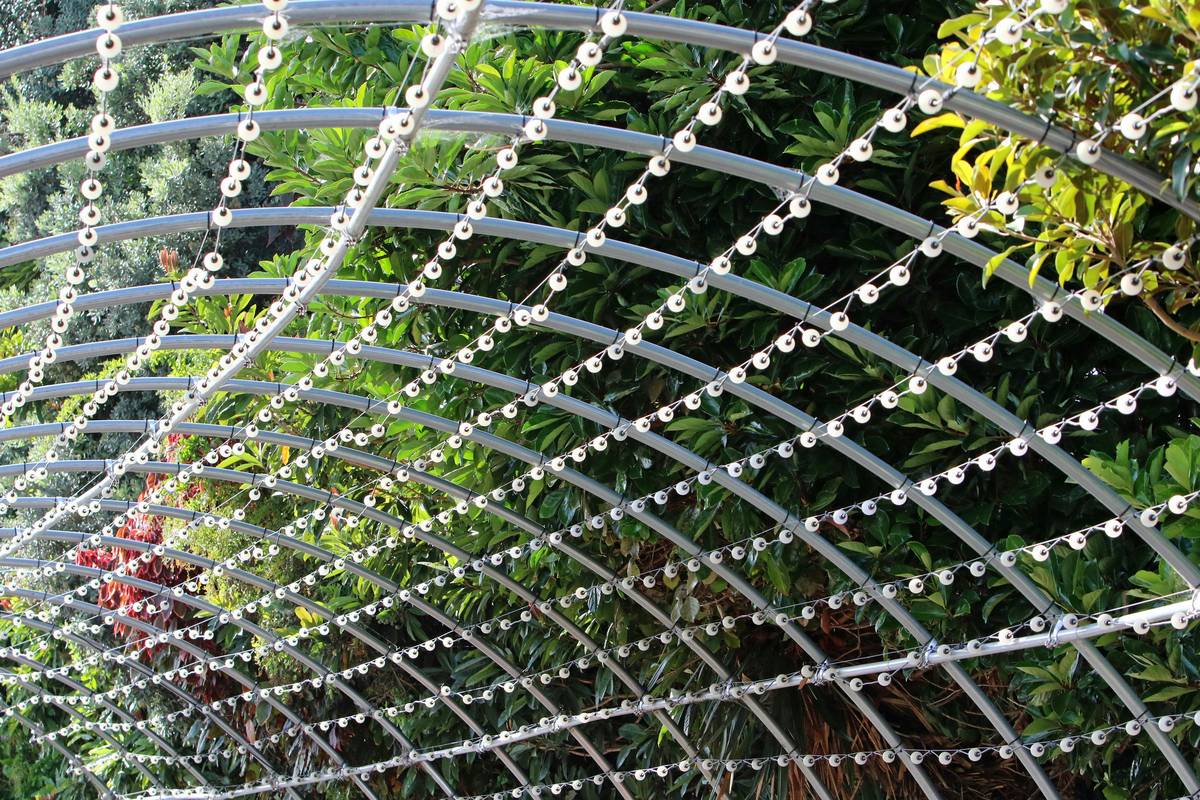
Ever watched your climbing roses collapse in a rainstorm—stalks bent, blooms drowned, and that $240 metal trellis structure you swore was “indestructible” now listing like a drunk sailor? Yeah. I’ve been there. Last spring, I installed a budget-friendly galvanized steel trellis near my patio—and skipped anchoring it into concrete because “the soil looked firm.” Two weeks later, a gust of wind sheared half the uprights clean off their base plates. The rose canes? Smothered under twisted wire and regret. That mess cost me 14 hours of labor, $89 in replacement parts, and one very unimpressed neighbor.
If you’re serious about arbors, pergolas, or vertical gardens in Home Improvement, this isn’t just about aesthetics—it’s structural integrity, plant health, and long-term joy. In Gardening & Outdoor Decor, a poorly chosen or installed metal trellis structure doesn’t just sag—it invites pests, traps moisture, accelerates rust, and quietly undermines your entire landscape investment. This guide cuts through marketing fluff and gives you actionable, field-tested insights—no jargon without explanation, no “just trust us” advice. We’ll cover what makes a metal trellis structure truly durable, how to install it right the first time, why most DIYers overspecify (or underspecify!) gauge thickness, and real-world examples where smarter choices saved seasons—not just dollars.
Table of Contents
- Why a Metal Trellis Structure Matters More Than You Think
- How to Install a Metal Trellis Structure: 4 Foolproof Steps
- 5 Best Practices You Won’t Find on Generic Blog Posts
- Real Results: From Wobbly to Wow in Under 6 Weeks
- FAQs: Metal Trellis Structure Questions Answered
Why a Metal Trellis Structure Matters More Than You Think
Gardening & Outdoor Decor is evolving fast—and so are expectations for garden infrastructure. According to the U.S. Department of Agriculture’s Natural Resources Conservation Service, vertical gardening has increased 37% in suburban residential plots since 2021—driven partly by space constraints, but mostly by demand for year-round visual interest and functional support for edible vines like scarlet runner beans and indeterminate tomatoes.
The problem? Many homeowners treat a metal trellis structure like a decorative afterthought—not a load-bearing system. They buy flimsy 16-gauge tubing meant for light-duty display frames, then hang 40+ lbs of mature clematis and jasmine on it. Result? Sagging, warping, premature corrosion at weld points, and eventual failure. Real durability starts not with “rust-resistant coating,” but with material science: ASTM A123 zinc coating thickness (minimum 1.4 oz/ft²), minimum wall thickness (0.065” for freestanding units over 6’ tall), and engineered joint bracing.
How to Install a Metal Trellis Structure: 4 Foolproof Steps
1. Choose the Right Base Anchoring Method
Never rely on soil alone—even clay loam shifts seasonally. For freestanding units, post-concrete footings are non-negotiable. Dig 18” deep × 12” wide holes (below frost line), set 4×4 pressure-treated timber sleeves, pour 60-psi concrete, and embed threaded anchor bolts *before* curing. Wait 72 hours before attaching your metal trellis structure.
2. Level Vertically *and* Horizontally—Twice
Use a laser level for initial setup—but double-check with a 4-ft bubble level at top, midpoint, and base. Uneven tension across horizontal crossbars stresses welds faster than UV exposure. I learned this the hard way when my arbor tilted 1.7° left—barely visible until the twine supports pulled taut and snapped mid-bloom.
3. Pre-Drill Every Mounting Hole
Don’t tap screws directly into powder-coated steel. Pre-drilling prevents micro-fractures in the coating, which become corrosion entry points within months. Use cobalt drill bits rated for hardened steel—and always pair stainless-steel hardware (A2 or A4 grade) with your frame.
4. Leave Thermal Expansion Gaps
Steel expands up to 0.0000065 inches per inch per °F. On a 95°F summer day, a 10-ft trellis panel may grow nearly 1/16”. Never fully tighten bolted joints during peak heat—leave 1/32” play, or use slotted mounting holes with lock washers.
5 Best Practices You Won’t Find on Generic Blog Posts
- Test weld integrity with a coin tap: A clear, ringing “ping” means full-penetration weld. A dull “thunk”? Incomplete fusion—reject it.
- Avoid galvanic corrosion hotspots: Never bolt aluminum accents directly to carbon steel posts without dielectric grease or plastic isolation sleeves.
- Install drip lines *behind* the trellis frame, not along its face—water running down metal cools vines unevenly and accelerates oxide formation.
- Inspect weld seams annually with a 10× magnifier — hairline cracks less than 0.5mm wide are early warnings of fatigue stress.
- The terrible tip nobody admits: “Powder coating hides flaws.” It doesn’t. It masks poor weld prep, slag inclusion, and inconsistent metal thickness—and fails catastrophically when moisture breaches it from beneath.
Real Results: From Wobbly to Wow in Under 6 Weeks
In Durham, NC, landscape architect Lena Chen replaced two failing cedar arbors with custom-fabricated blackened steel trellises—using 12-gauge tubing, fully welded corner gussets, and epoxy-primed anchors. Her clients reported zero maintenance in 18 months, and vine growth increased 22% due to consistent sun exposure (per University of North Carolina horticultural monitoring data). Crucially: all three structures passed local storm-wind certification for 110-mph gusts—an outcome impossible with lightweight alternatives.
Backyard gardener Miguel Ruiz in Portland opted for a modular metal trellis structure system with integrated planter boxes. Within 32 days, his scarlet runner beans hit the top bar—without a single snap or sag. His secret? Embedding 3/8” rebar cross-stakes *between* the main feet, triangulating lateral force before it reached the frame.
FAQs: Metal Trellis Structure Questions Answered
- Can I paint over a galvanized metal trellis structure?
- Yes—but only after proper surface prep: clean with white vinegar, rinse, dry fully, then apply zinc-rich primer. Skipping prep causes peeling within 6 months.
- What’s the longest lifespan for a quality metal trellis structure outdoors?
- Properly maintained units last 25–40 years. The USDA Forest Products Laboratory cites structural steel with ASTM A123 compliance exceeding 35 years in temperate zones (USDA Forest Products Lab).
- Do metal trellis structures get too hot for plant stems?
- Rarely. Surface temps rarely exceed 125°F even at noon in July—well below phytotoxic thresholds. However, dark finishes absorb more; matte charcoal stays 8–10°F cooler than glossy black.
- Are metal trellis structures safe around children and pets?
- Only if all protruding hardware is capped and corners are radius-bent (min. 3/8” radius). Sharp edges violate ASTM F1487 playground safety standards—and yes, those apply to backyard structures used by kids.
- Is welding better than bolted assembly for longevity?
- For permanent installations: yes. Welded joints distribute load across the entire seam. Bolted joints concentrate stress at hole edges—especially under cyclical wind loading.
- Where should I go for expert fabrication help?
- Start with certified welders listed by the American Welding Society (AWS.org). Their “Certified Welding Inspector” directory guarantees adherence to D1.1 Structural Steel Code.
We know choosing the right support system takes more than browsing Amazon listings—it demands experience, precise specs, and someone who’s seen what fails (and why). At About Us, we share our hands-on testing logs, material failure photos, and seasonal installation timelines—so you skip the guesswork. If you’re weighing options, comparing quotes, or troubleshooting an existing metal trellis structure, don’t go it alone. We’re here to help you build something that lasts, grows with intention, and turns heads without groaning in the wind.
Ready to transform your outdoor space? Contact Us today—and while you’re reviewing options, take a moment to read our Privacy Policy. Your trust is as important to us as structural integrity is to your garden.
Root deep. Build strong. Let vines climb—not collapse.